
Finding Grand Rapids Residents From a Name or Address
Grand Rapids resident records work best as a chain. An address leads to a parcel number. A parcel leads to a tax-roll name. The name leads to a recorded deed. The deed opens the earlier owner. A name can run the chain backward. A city directory, court index, business filing, or voter record request can carry it toward an address. Each source answers one narrow question. The tax roll names the taxpayer carried by that system, while an old street directory records the occupant or business at a printed address. Keep the record date beside every result. Dates keep a former owner, a mailing contact, and a true directory occupant from blending together.
Use the official trail first. When an online result stops, ask the custodian for a copy, a correction route, or a records request. The county handles parcels and deeds, while the library and City Archives hold much of the historical address evidence in Grand Rapids. A resident lookup should state plainly what it has established, whether that is owner at a parcel, voter-file entry, party to a case, or directory occupant.
- Search a known address in the county property system and preserve the parcel number, situs address, and tax-roll name.
- Compare the current name with the recorded-instrument index, using spelling variants and the legal description when needed.
- For a person rather than an address, use a bounded official record such as a court index, voter-file request, business filing, or license verification.
- Move to Grand Rapids directories, newspapers, and obituary indexes when the question concerns a past household or an earlier name.
- Request the underlying file, microfilm, or archive material from the office that keeps it when the web index has no result.
Grand Rapids Residents and Their Record Custodians
Grand Rapids is the Kent County seat. Central county offices therefore hold several useful record trails. The Clerk/Register of Deeds maintains recorded land instruments and carries county clerk duties as well. Equalization and the city assessor supply parcel and tax data. Elections holds the public route to voter-file material, with redactions applied. The City Archives keeps older municipal records by appointment. Start with the office whose record matches the question. Then use its contact and copy route rather than treating a search screen as a certified record.
Kent County Clerk/Register of Deeds
300 Monroe Ave. NW
Grand Rapids, MI 49503
616-632-7610
Grand Rapids Assessor
City Hall and 311 service route
Grand Rapids, MI
616-456-3081
Kent County Elections
300 Monroe Ave. NW
Grand Rapids, MI 49503
616-632-7650
Grand Rapids Residents Start With a Kent Parcel
A Kent parcel card is a strong first record. Use it when the address is already known. The county search accepts a street number, a number range, a street name, a municipality, or an exact segmented parcel number. It separates active from inactive parcels too. A Grand Rapids parcel number in the city system is usually twelve digits beginning with 41. The result can show the situs address, owner and taxpayer names, separate mailing details, legal description, sale history, values, and tax information. It is a parcel reference, not a household roster.
| Property-search field | Use in a Grand Rapids search |
|---|---|
| Street number or range | Locate one parcel or narrow a block segment. |
| Street name | Try the name without punctuation or a street suffix when needed. |
| City, township, or village | Keep the jurisdiction with the search result. |
| Parcel sections | Use the complete parcel when it is already known. |
| Active or inactive status | Include the appropriate parcel condition before searching. |
The Kent County Property Search screen holds these controls.
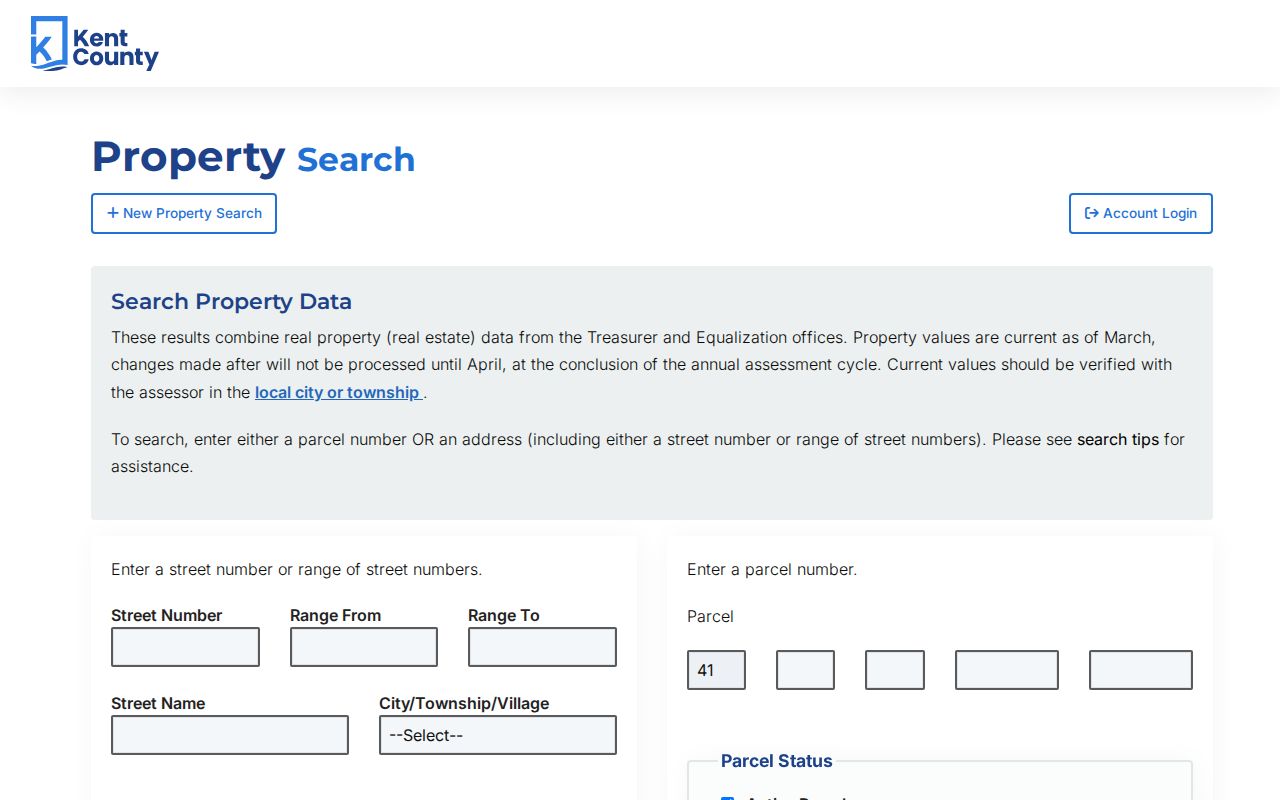
The search screen shows why an address or parcel works better than a name as a starting point. Other Grand Rapids records come next.
Grand Rapids Deed Records Follow the Ownership Trail
The recorded-instrument index complements the tax roll. Kent County makes basic land-record searching available online from January 1, 1970. Grantor and grantee spellings, recording dates, document placement, and legal-description clues all matter. The index is a lead, not the deed itself. It shows a recorded relationship to land. A transfer can involve a trust, an estate, a lender, or an entity. Save the document number, recording date, and exact party spelling. Then step back to the next instrument.
The county reports that basic searching remains free. From June 22, 2026, basic document downloads and prints are $1 per page. Older records continue through counter service, deed books, microfilm, and historical repositories. The online cutoff is not where Grand Rapids ownership history begins.
| Grand Rapids access route | What it provides | Best use |
|---|---|---|
| Free deed-index search | Party names, dates, and document-placement clues from 1970 forward | Identify the instrument before ordering or visiting. |
| Purchased document image | The selected image after the county's per-page purchase rule | Read the recorded instrument itself. |
| Counter, copy request, or microfilm | Copies and older book or index access | Continue a pre-1970 or incomplete online trail. |
The Kent County Clerk/Register of Deeds covers these duties.
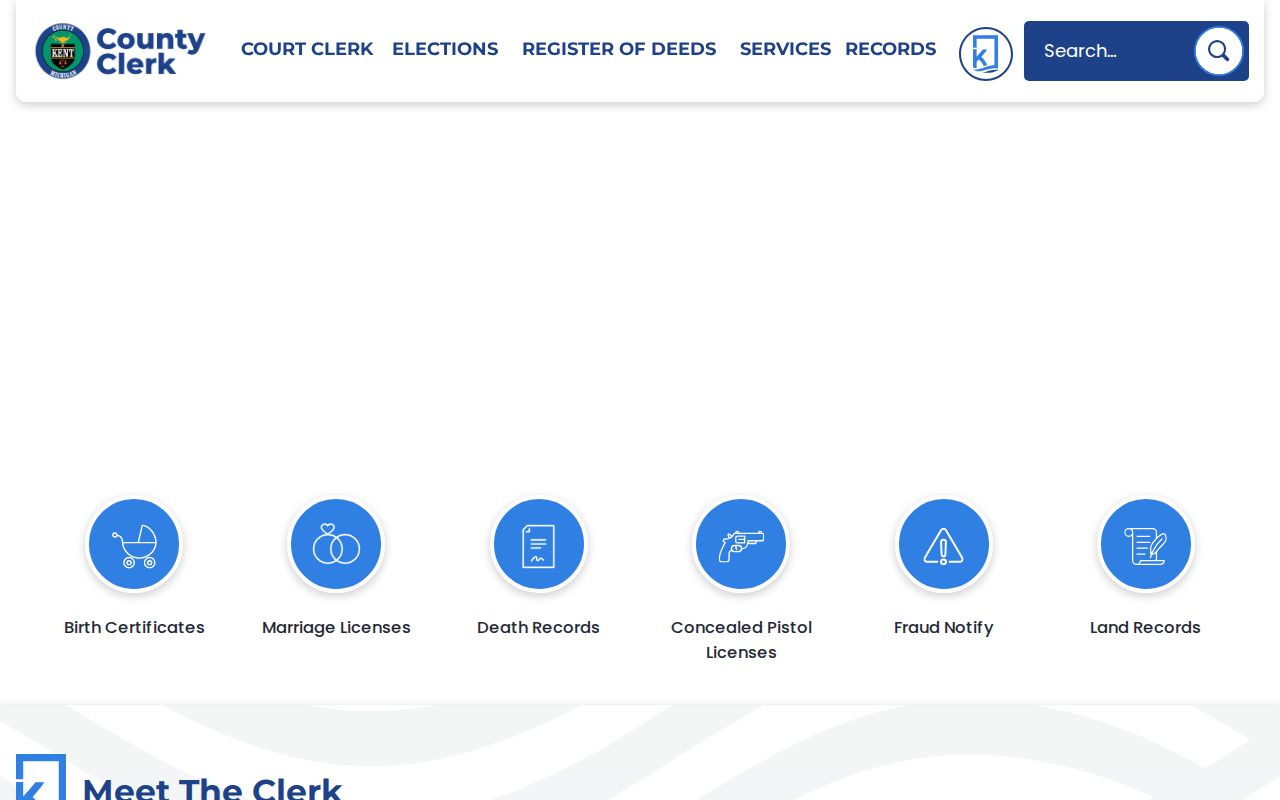
That office pairs the land-record route with county clerk functions. It is a key stop when an online clue needs an official copy in Grand Rapids.
Grand Rapids Residents and Public Civic Records
Michigan built its voter tool for one voter at a time. You enter your own details and see your registration, polling place, and ballot. A broader voter file takes a different path. The Michigan Freedom of Information Act, 1976 PA 442, MCL 15.231 et seq., governs that route. You send a written request to Kent Elections. The request form lets you narrow your ask. You can pick county, city, township, district, ward, precinct, or a single election. You can ask for all current registered voters. You can also ask for voters from one specific election. Where possible, the county emails a digital file; a portable USB is another option. Printing runs $0.10 per page.
Public output has firm limits. Month and day of birth stay out. So do ID numbers and phone numbers. Email addresses stay out too. The same goes for signatures, the last four Social Security digits, and anything tied to the Address Confidentiality Program. Ballot choices are never attached to a name in an ordinary public record. Treat the voter file as a civic record with redactions. It is not proof of every person at an address. That distinction keeps a Grand Rapids residents directory honest.
Kent County's public-record request route shows how to describe the record clearly. The clearer your description, the easier the custodian can find it.
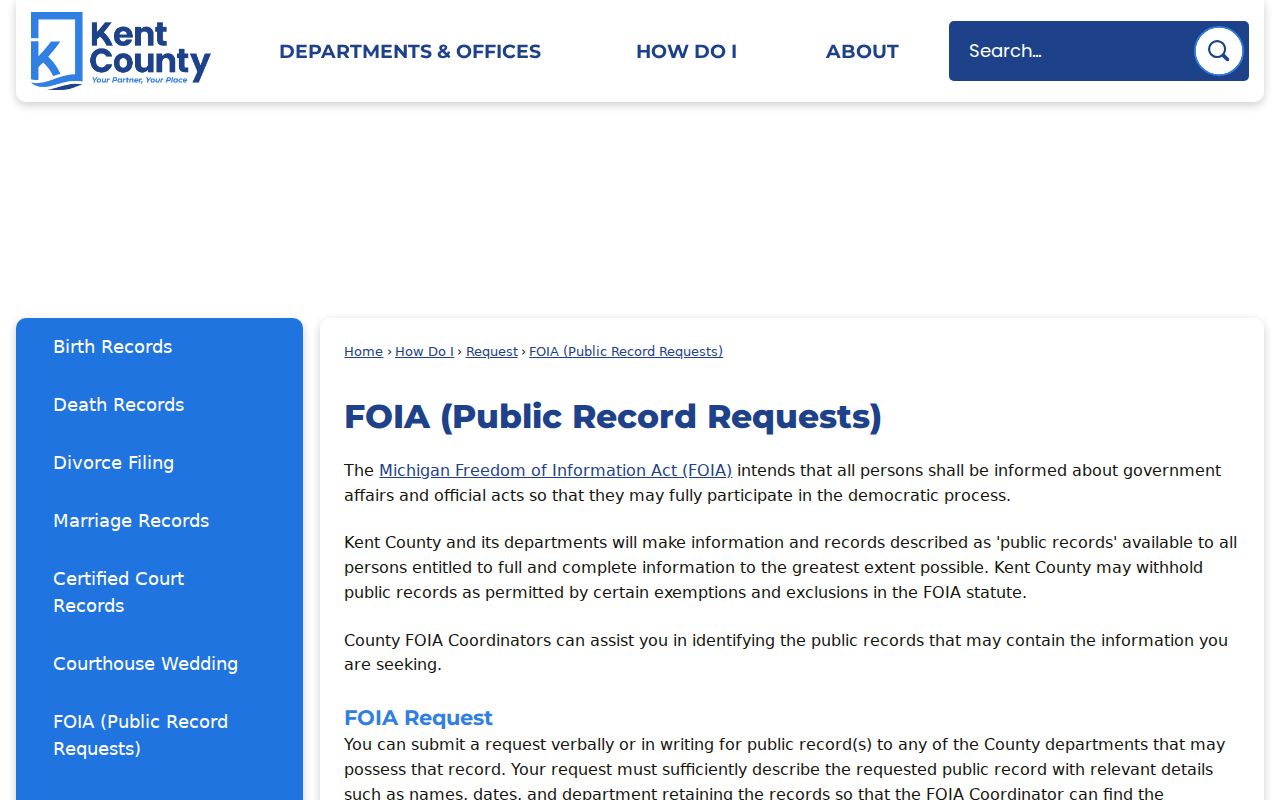
When a public search screen cannot produce an official record, the county request route is the documented fallback. Use it when the voter or civic record you need sits outside any online lookup.
Grand Rapids Records Need a Michigan FOIA Request
Michigan FOIA opens most records to anyone who asks. Grand Rapids offices still keep their own rules. Privacy laws survive alongside it. So a written request should name the record type, a date range, the name spelling, and the address or parcel number, which gives the custodian something real to search. The usual reply window is five business days. A custodian can add one ten-business-day extension under MCL 15.235. Court files, election records, land records, and city archives each route copies their own way, so expect a separate request for each set.
The Michigan Attorney General FOIA guidance spells out the statewide request framework and the response rules that apply.
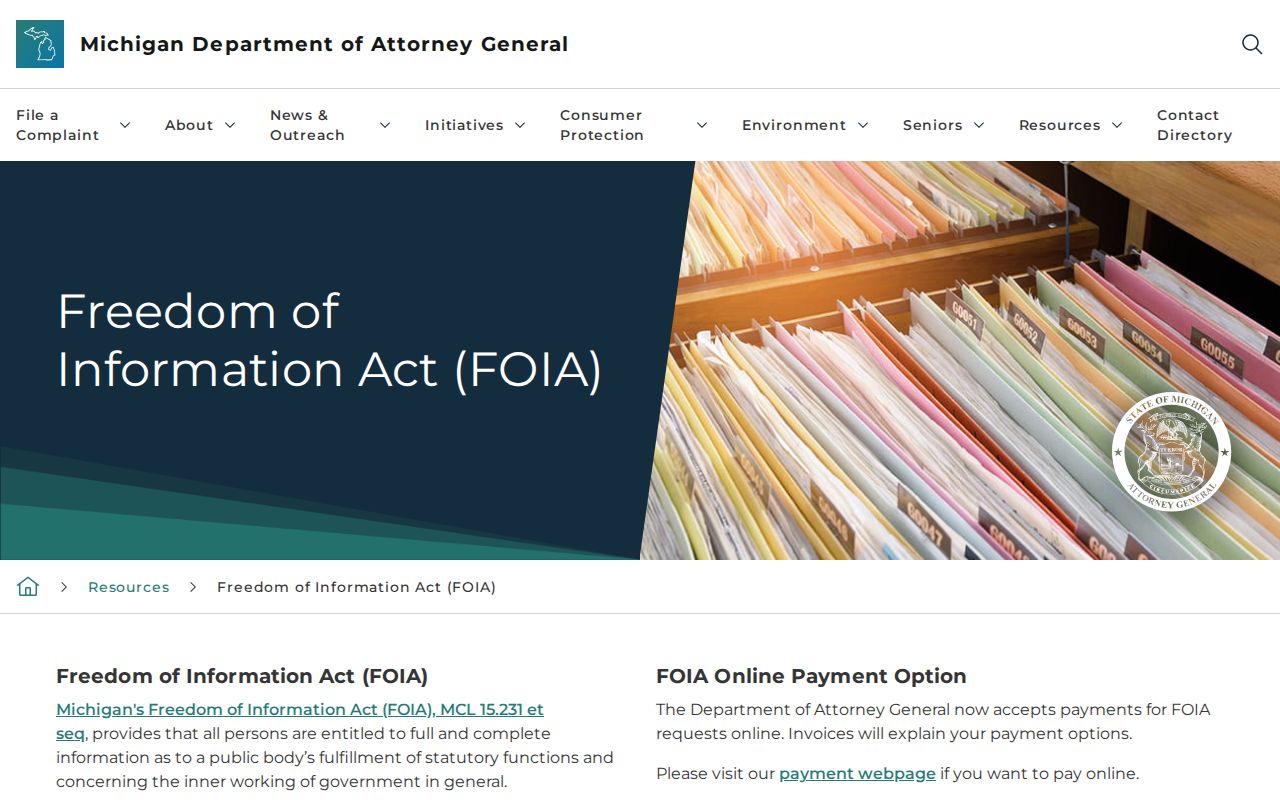
FOIA is a way in, not a mandate to build something new. It covers records that already exist. A custodian has no duty to compile a fresh resident list for a requester. Exempt information stays exempt no matter how the request is worded.
Current Grand Rapids Resident Rolls and Indexes
No single Grand Rapids residents directory covers every household. The practical sources are purpose-built records. Each one covers a different slice of the city. A parcel roll carries an owner or taxpayer name. A deed index names the parties to a recorded instrument. A voter file is public, though subject to redaction, while the city contact directory stops at elected and appointed officials and neighborhood associations share only public contacts, never member lists. Label every result with its source, because the gap between an owner, a voter, an official, and an association contact matters.
| Grand Rapids source | What it can establish | Custodian | Access path |
|---|---|---|---|
| Property search | Parcel, tax name, mailing and situs detail | Kent County and local assessor | Free portal and assessor confirmation |
| Voter record request | Public, redacted voter-file fields | Kent Elections | FOIA request and stated delivery options |
| Recorded-instrument index | Grantor, grantee, date, and document placement | Clerk/Register of Deeds | Free index, paid images or copy route |
| City contacts directory | Listed elected and appointed city officials | City of Grand Rapids | Online, but expressly incomplete |
| Neighborhood contacts | Public association boundary and contact layer | City map and associations | Map, guide, or association contact |
One person deserves more than one record. Compare facts instead of stacking names. A property result can be tested against a deed or a dated directory entry. A court or vital-record lead must be confirmed with its own custodian, and the fuller method is laid out in the Grand Rapids resident lookup record trail.
Grand Rapids Archives Keep the Offline Address Trail
The Grand Rapids City Archives and Records Center is the fallback for material missing from current portals. Access is by appointment. Its holdings run deep. Assessment rolls begin in 1926, appraisal cards span 1936 through 2009, and tax rolls reach back to 1860. Polk directories from 1865 sit alongside maps, photographs, planning records, historical permits, and other city records. The collection shines when a parcel or directory entry needs a date, an older street number, or a building history. You can request a scan or a physical copy. Scans are free, physical copies cost $0.10 each, and most requests finish within one to three business days. For appointment details and the full range of municipal collections, see Grand Rapids City Archives and Records Center. It is the strongest offline address trail in the city.
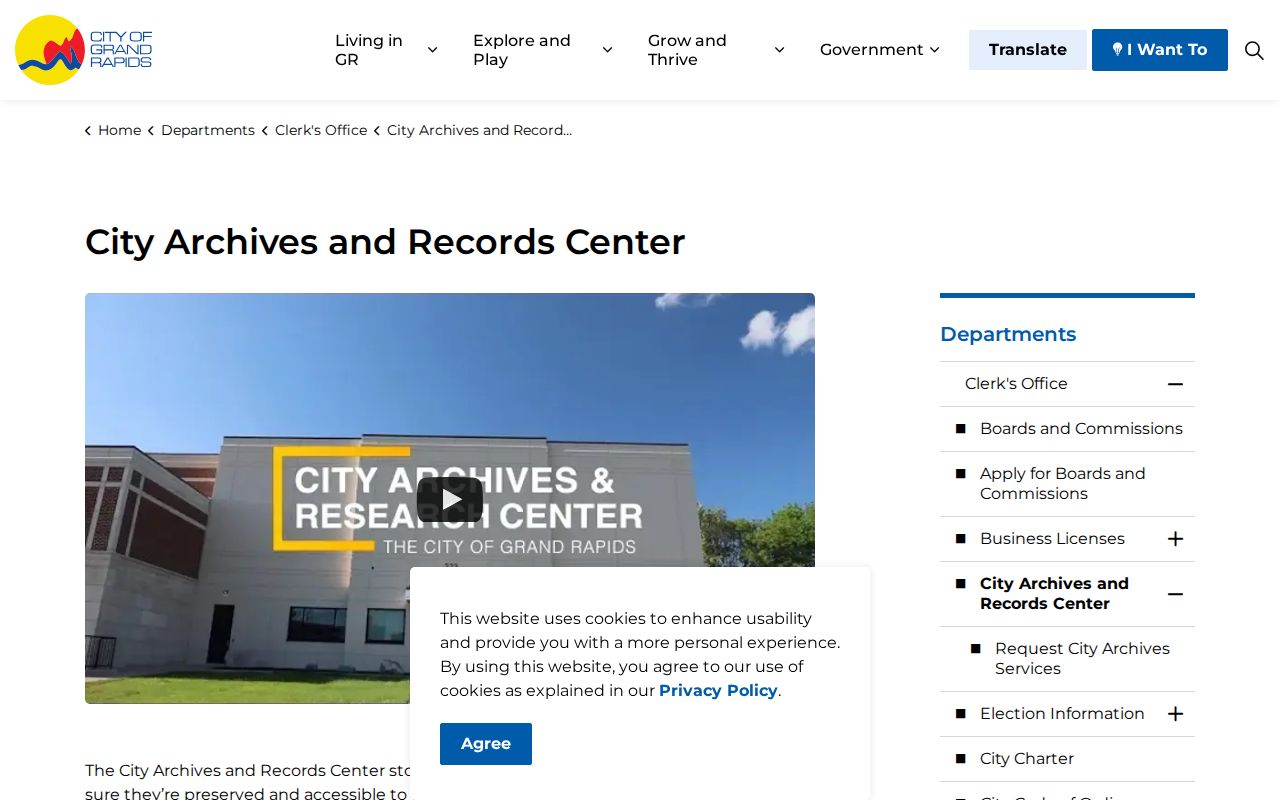
Old paper trails don't match today's parcel search. Grand Rapids archive series such as assessment rolls, tax lists, permits, and old city directory volumes answer address questions that a current resident lookup simply cannot.
Grand Rapids Public Contacts Are a Limited Directory
Grand Rapids' contacts directory lists elected and appointed officials with their official channels. It is not a resident list. Think of it as a civic switchboard. Use it when the question is which office holds a record, not who lives at an address. Historical city records flow through the Archives, while current permits, planning items, and property complaints run through the address-based Citizen Access system. Each custodian can explain access, copies, and corrections. Officials can also point to a FOIA route when a record needs a formal request. Start with the published contact.
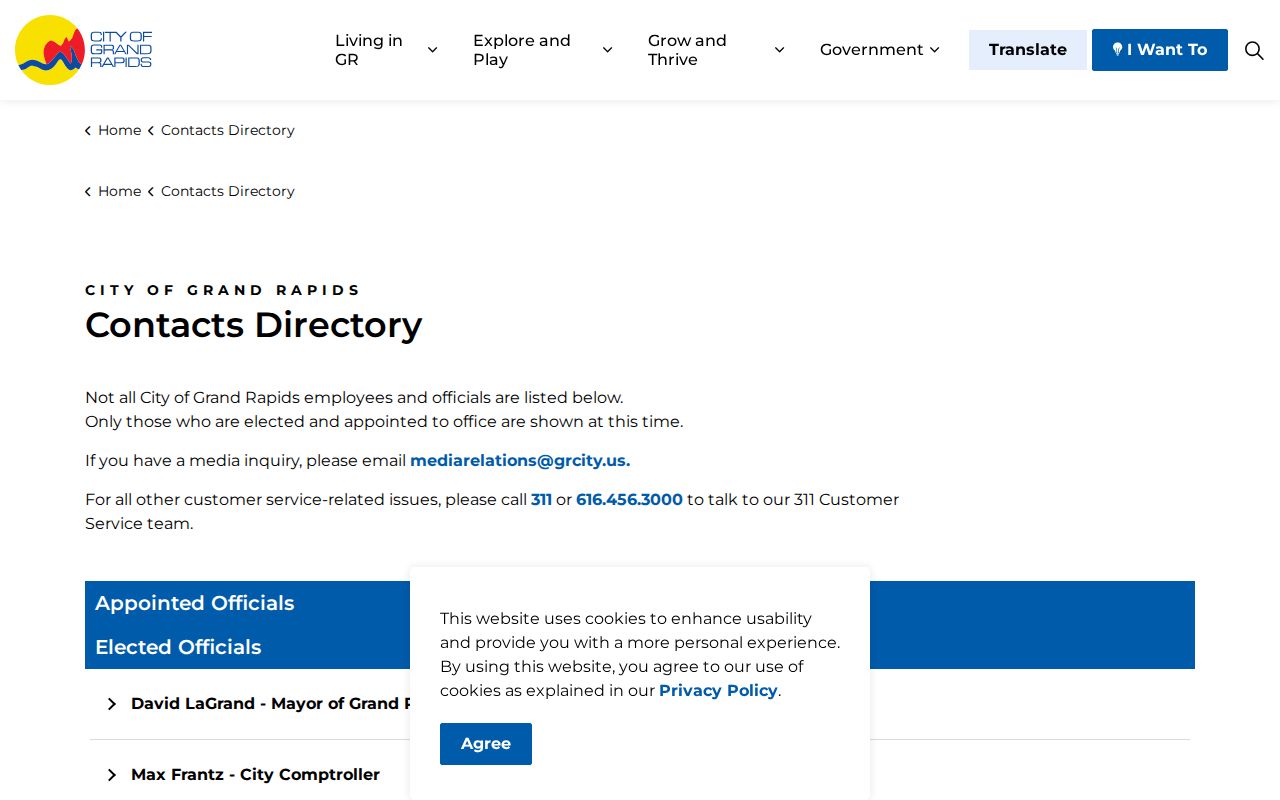
The contacts tool states plainly that its scope is incomplete. A Grand Rapids residents directory built from it would miss most of the city, so no one should read it as a universal list.
Grand Rapids Names in Business and License Records
Business records can hint at ties. Michigan's Corporations Division route leads to the MiBusiness Registry Portal, where an entity record shows a registered office plus any agent or filed officer role. A MiPLUS license record adds status, issue and expiration dates, specialty, address, and public discipline where it exists. Neither proves where someone lives. A name on a filing does not even confirm control of a storefront. Read every hit narrowly. Compare the record year, role, and address against a parcel, permit, directory, or recorded document first. Then draw conclusions.
Business filings carry entity and officer fields. Those fields help separate a real business tie from a claim on a personal address in the Grand Rapids residents directory.
The Michigan UCC search offers a separate debtor-name index. It lists active and lapsed filings. Treat it as a financing-notice lookup, not a title conclusion.
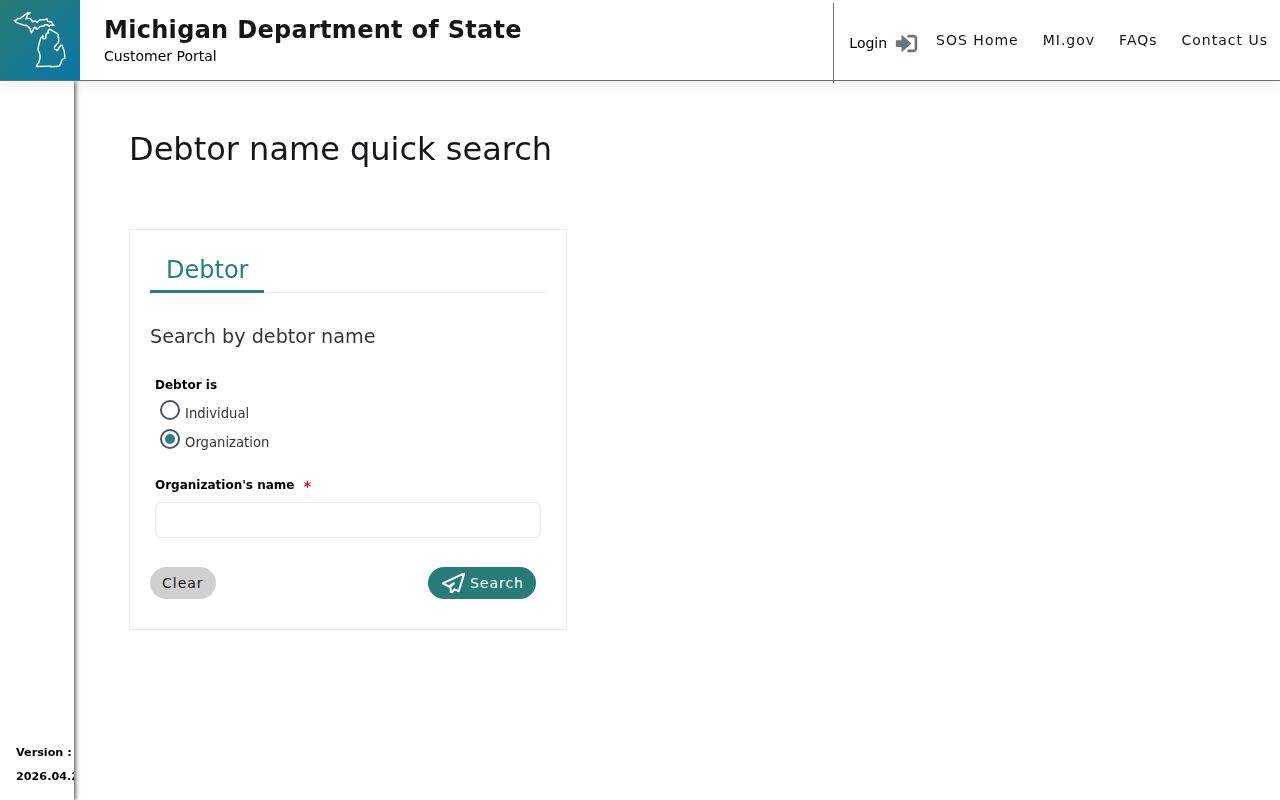
A UCC filing can document a financing record against a name. It still cannot replace the county deed or parcel record for ownership in Grand Rapids.
Grand Rapids Addresses Changed in 1912
Older Grand Rapids resident records hide a local trap. The city renumbered every address in 1912. Fulton Street and Division Avenue served as the baseline for four quadrants. The 1912 Sanborn material helps bridge old numbers to new ones. Its annotated street index helps as well. Street names changed too. When you search an older household, work with the old number, the new number, and the street name. Add a nearby cross street. Include the lot or block if known. A modern geocoder cannot make that conversion reliably for every address.
The 1912 bridge matters most when a directory entry ends abruptly. The family may simply have moved. Yet the apparent gap can also come from citywide renumbering or a renamed street. A publication gap can cause it too. Initials used instead of a full given name can do the same. The Grand Rapids by-street directory explains the modern parcel and street side of that trail.
Grand Rapids Newspaper and Obituary Leads
Newspapers and obituary indexes can bridge a directory year to an estate, cemetery, or probate record. The Grand Rapids Press and Herald obituary indexing starts in 1910. It runs through the Western Michigan Genealogical Society. The library's historic newspaper resources add important local runs. A newer search viewer launched in 2025. These are leads. They still need date and name checks. An obituary may name relatives, a former address, a funeral home, or a burial place. The underlying custodian remains the best source for a final record.
The Library of Michigan Kent County guide extends a local search to older county record groups.
The Kent County archives guide is a useful extension once city and library collections point toward older county, naturalization, military, or court material for Grand Rapids.
Historical Grand Rapids Resident Directories
The historical shelf runs unusually deep in Grand Rapids. The Grand Rapids History Center documents city-directory microfilm from 1856 through 1956. Its broader cataloged run spans 1859 through 1998. Later Kent County East and West volumes extend the shelf. The earliest documented item in Collection 301 is the 1859/60 Williams Grand Rapids Directory. City Archives also lists Polk directories from 1865. A directory places a name, occupation, business, or household clue at a printed address for that edition. It cannot prove ownership on its own. Nor can it fill a year that was never published.
- Parcel
- A mapped unit of land with an identifying number, distinct from a list of everyone at an address.
- Index
- A finding aid that points to a record, rather than the full record or a certified copy.
- Criss-cross directory
- An address-oriented directory section that can help connect a street address to a printed occupant or business entry.
Catalog gaps matter. The library notes no publication for 1947, 1950, 1952, 1957, 1989, and 1991 in the relevant series. Selected editions are digitized in HathiTrust and Google Books. Many volumes remain an in-library or archive request. The Grand Rapids city directories page covers the collection methods, abbreviations, and tracing steps.
Grand Rapids Residents Need Protected-Address Limits
Some records are deliberately not a public search result. Michigan's Address Confidentiality Program gives eligible participants a substitute address and protected voter-registration treatment. Vital records, sealed and juvenile court matters, protected voter information, driver records, utility accounts, and many private membership lists carry separate limits. A missing result can reflect a restriction, an index gap, a different spelling, or a counter-only record. It is not proof that a person was never connected to Grand Rapids.
Michigan's Address Confidentiality Program describes the substitute-address protections and who may qualify.
Protected-address rules are one reason to read each result narrowly. Before relying on an official entry, confirm what it means with the custodian of that record.