
Finding Grand Rapids Residents From a Name or Address
Grand Rapids resident records work best as a chain. An address can lead to a parcel number, a tax-roll name, a recorded deed, and then an earlier owner or household clue. A name can lead in the other direction through a directory, court index, business filing, or voter record request. Each source answers a narrow question. The tax roll identifies the person or entity carried by that system, while an old city directory records an occupant or business at a printed address. Keep the record date beside every result. It is the fastest way to avoid confusing a former owner, a mailing contact, and a person who actually appeared in an older directory.
Use the official trail first, then ask the custodian for a copy, correction route, or records request when the online result stops. Grand Rapids has a strong paper and microfilm layer as well. The county is the starting point for parcels and deeds, while the library and City Archives carry much of the historical address evidence. A resident search should be specific about what it has established: owner at a parcel, voter-file entry, party to a case, or directory occupant.
- Search a known address in the county property system and preserve the parcel number, situs address, and tax-roll name.
- Compare the current name with the recorded-instrument index, using spelling variants and the legal description when needed.
- For a person rather than an address, use a bounded official record such as a court index, voter-file request, business filing, or license verification.
- Move to Grand Rapids directories, newspapers, and obituary indexes when the question concerns a past household or an earlier name.
- Request the underlying file, microfilm, or archive material from the office that keeps it when the web index has no result.
Grand Rapids Residents and Their Record Custodians
Grand Rapids is Kent County's seat, so the central county offices handle several useful record trails. The Clerk/Register of Deeds maintains recorded land instruments and also has county clerk responsibilities. Equalization and the city assessor supply parcel and tax data. Elections holds the public-record route for voter-file material, subject to redactions. The City Archives holds older municipal records by appointment. Start with the office whose record matches the question, then use the contact and copy route rather than trying to turn a search screen into a certified record.
Kent County Clerk/Register of Deeds
300 Monroe Ave. NW
Grand Rapids, MI 49503
616-632-7610
Grand Rapids Assessor
City Hall and 311 service route
Grand Rapids, MI
616-456-3081
Kent County Elections
300 Monroe Ave. NW
Grand Rapids, MI 49503
616-632-7650
Grand Rapids Residents Start With a Kent Parcel
A Kent parcel card is a sound first record when an address is known. The county search accepts a street number, a number range, street name, municipality, or an exact segmented parcel number. It also distinguishes active and inactive parcels. A Grand Rapids parcel number is commonly a 12-digit number beginning with 41 in the city system. The result can show the situs address, owner and taxpayer names, separate mailing details, legal description, sale history, values, and tax information. It remains a parcel reference, not a household roster.
| Property-search field | Use in a Grand Rapids search |
|---|---|
| Street number or range | Locate one parcel or narrow a block segment. |
| Street name | Try the name without punctuation or a street suffix when needed. |
| City, township, or village | Keep the jurisdiction with the search result. |
| Parcel sections | Use the complete parcel when it is already known. |
| Active or inactive status | Include the appropriate parcel condition before searching. |
Kent County Property Search presents the address, range, and parcel controls used for this first pass.
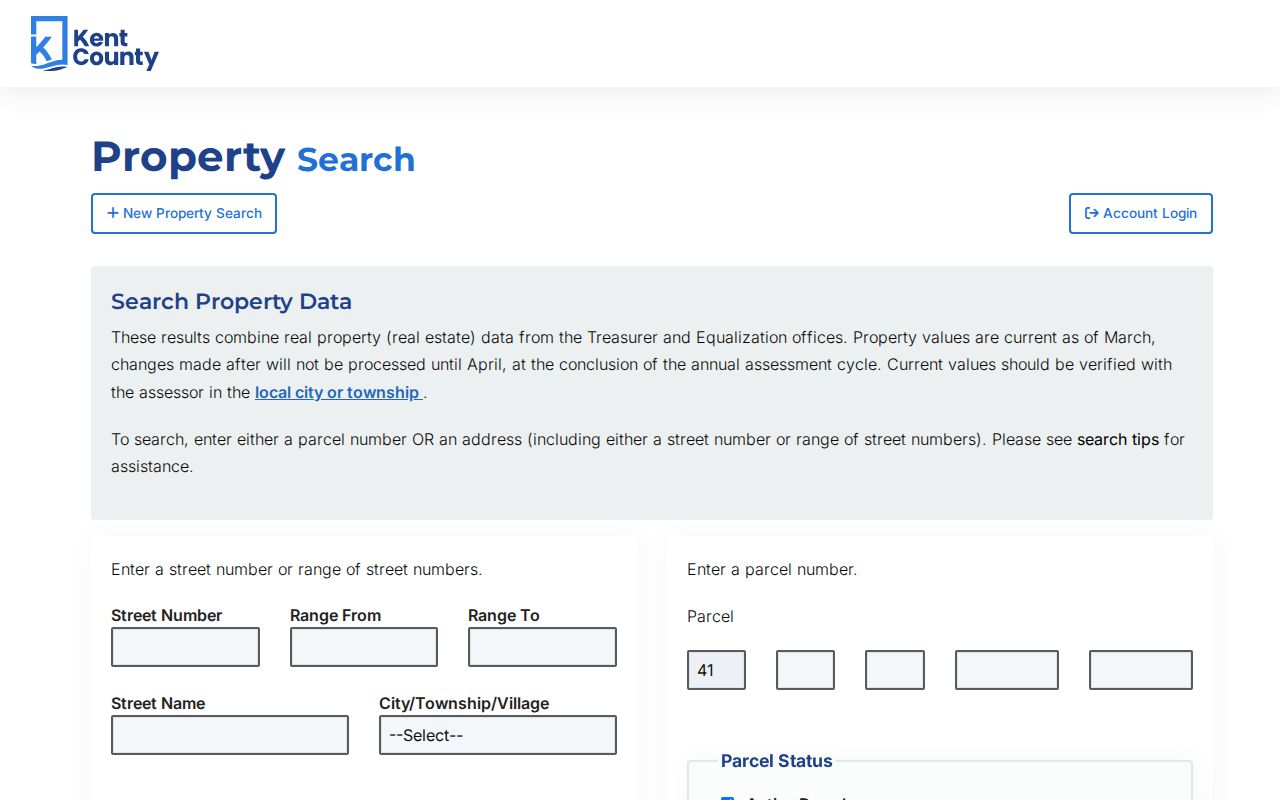
The search screen shows why an address or parcel is the practical starting point before a name is checked against other Grand Rapids records.
Grand Rapids Deed Records Follow the Ownership Trail
The recorded-instrument index complements the tax roll. Kent County makes basic land-record searching available online from January 1, 1970. Search grantor and grantee spellings, recording dates, document placement, and legal-description clues. The index is a lead rather than the deed itself. It helps show a recorded relationship to land, but a transfer can involve a trust, estate, lender, or entity. Keep the document number, recording date, and exact party spelling before moving backward to the next instrument.
The county reports that basic searching remains free. From June 22, 2026, basic document downloads and prints are $1 per page, while older records continue through counter service, deed books, microfilm, and historical repositories. That split is a useful reminder that the online cutoff is not the start of Grand Rapids ownership history.
| Grand Rapids access route | What it provides | Best use |
|---|---|---|
| Free deed-index search | Party names, dates, and document-placement clues from 1970 forward | Identify the instrument before ordering or visiting. |
| Purchased document image | The selected image after the county's per-page purchase rule | Read the recorded instrument itself. |
| Counter, copy request, or microfilm | Copies and older book or index access | Continue a pre-1970 or incomplete online trail. |
Kent County Clerk/Register of Deeds is the official office source for the record responsibilities shown in this image.
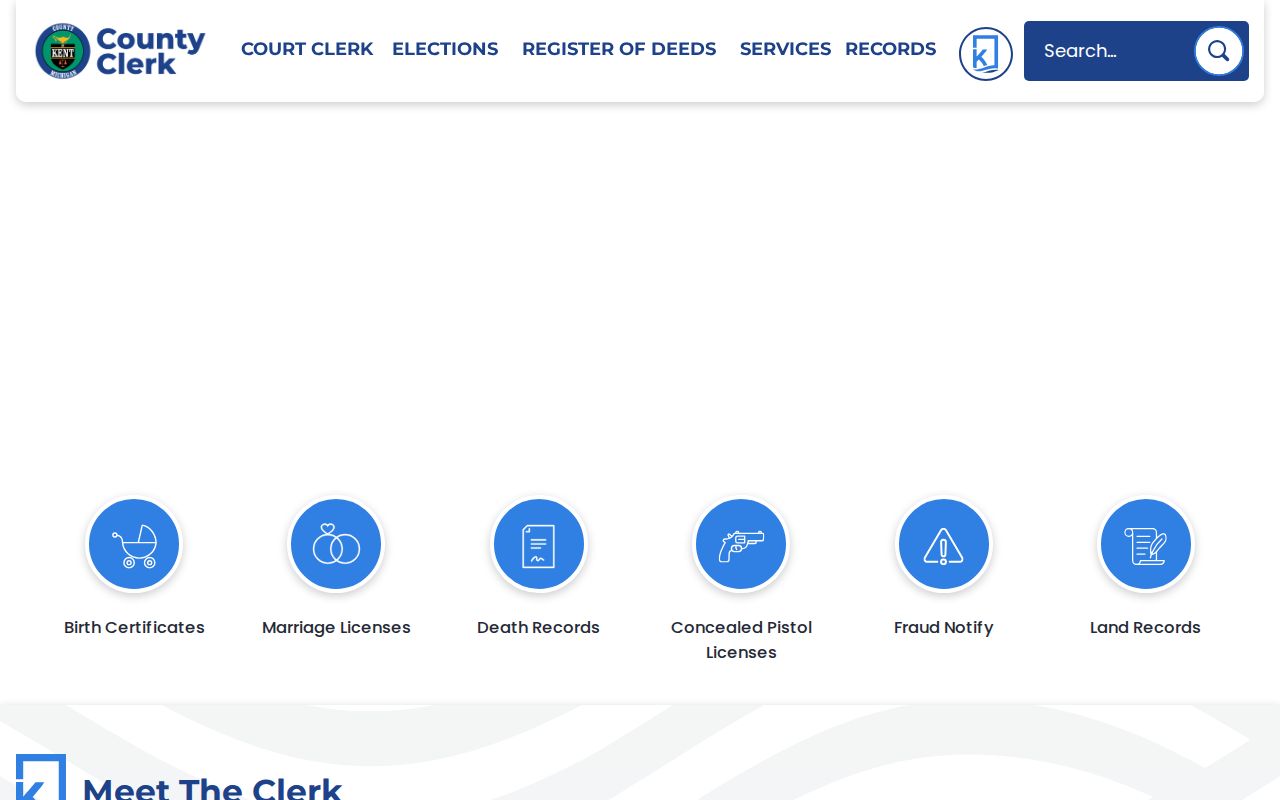
The Clerk/Register office combines the local land-record route with county clerk functions, making it a key stop when an online clue needs an official copy.
Grand Rapids Residents and Public Civic Records
Michigan's voter-information tool is designed for a voter to check their own registration, polling place, and ballot information. A broader public voter record follows a different route: a written request to Kent Elections under the Michigan Freedom of Information Act, 1976 PA 442, MCL 15.231 et seq. The request form can be limited by county, city, township, district, ward, precinct, or election. It can request all current registered voters or voters for a specific election. The county can provide a digital file by email where possible, or a portable USB; printing is $0.10 per page if required.
Public production has firm limits. Month and day of birth, ID numbers, phone and email, signatures, the last four Social Security digits, and Address Confidentiality Program material are not public output. Ballot choices are not attached to a person in an ordinary public record. Treat voter material as a civic record with redactions, not as proof of every person at an address.
Kent County's public-record request route explains how to submit a request that describes the record well enough for the custodian to locate it.
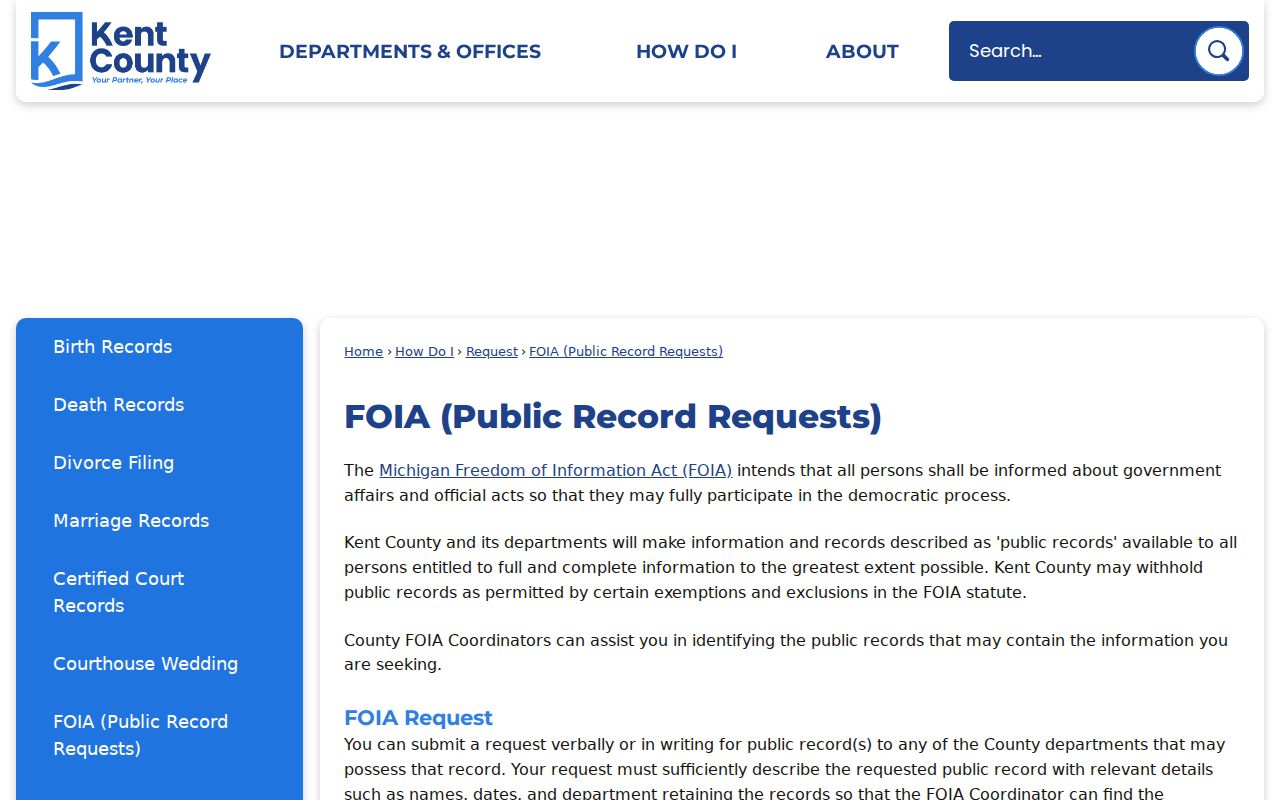
The county request information is the documented fallback when an official record cannot be obtained from a public search screen.
Grand Rapids Records Need a Michigan FOIA Request
Michigan FOIA favors access to public records, but it does not erase separate privacy laws or custody rules. A written request should identify the records sought clearly enough for the office to search. The ordinary response period is five business days, and the custodian may take one ten-business-day extension under MCL 15.235. County and city archives, court files, election records, and land records each have their own copy route. Asking for a specific record type, date range, name spelling, and address or parcel number makes a records request much more useful.
Michigan Attorney General FOIA guidance describes the statewide request framework and the response rules.
FOIA is an access route for existing public records. It does not require a custodian to create a new resident list or release exempt information.
Current Grand Rapids Resident Rolls and Indexes
No current Grand Rapids residents directory lists every household. The useful sources are purpose-built records with different coverage. A parcel source carries an owner or taxpayer name. A deed index carries the parties to a recorded instrument. A voter file is a public record subject to redaction. The city contact directory is limited to elected and appointed officials, and neighborhood associations provide public contact routes rather than member lists. Use the source label with the result, because the difference between owner, voter, official, and association contact matters.
| Grand Rapids source | What it can establish | Custodian | Access path |
|---|---|---|---|
| Property search | Parcel, tax name, mailing and situs detail | Kent County and local assessor | Free portal and assessor confirmation |
| Voter record request | Public, redacted voter-file fields | Kent Elections | FOIA request and stated delivery options |
| Recorded-instrument index | Grantor, grantee, date, and document placement | Clerk/Register of Deeds | Free index, paid images or copy route |
| City contacts directory | Listed elected and appointed city officials | City of Grand Rapids | Online, but expressly incomplete |
| Neighborhood contacts | Public association boundary and contact layer | City map and associations | Map, guide, or association contact |
For a single person, compare facts rather than adding names together. A property result can be checked against a deed or a dated directory entry, and a court or vital-record lead must be verified with its own custodian. The fuller one-person method is available through the Grand Rapids resident lookup record trail.
Grand Rapids Archives Keep the Offline Address Trail
Grand Rapids City Archives and Records Center is the local fallback for material that does not appear in a current portal. Its appointment-based holdings include assessment rolls from 1926, appraisal cards from 1936 through 2009, historical permits, tax rolls from 1860, Polk directories from 1865, maps, photographs, planning records, and city records. The collection is particularly useful when a parcel or directory needs a date, an older street number, or a building history. Requests can be made for a scan or a physical copy. The city estimates most requests at one to three business days, provides scans without charge, and charges $0.10 per physical copy.
Grand Rapids City Archives and Records Center explains the appointment access and the range of municipal collections.
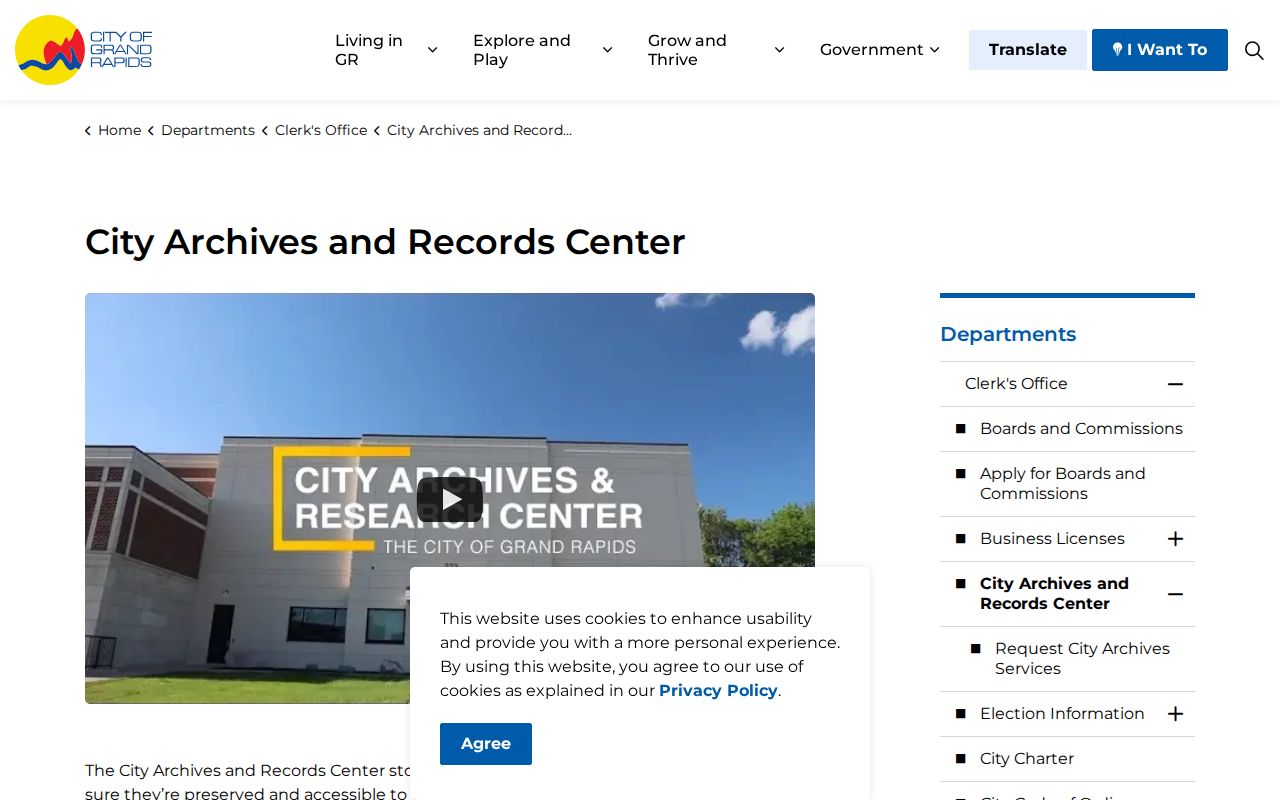
The archive route matters because older assessment, tax, permit, and directory series are not interchangeable with a current parcel search.
Grand Rapids Public Contacts Are a Limited Directory
The city publishes a contacts directory for elected and appointed officials. It is a focused government-contact tool, not a listing of all residents or all city staff. That distinction is useful when a search is about the responsible office rather than a private individual. The city also routes historical city records through the Archives and many current permits, planning items, and property complaints through its address-based Citizen Access system. For record questions, use the official contact detail to reach the custodian who can explain access, copies, corrections, or a FOIA route.
Grand Rapids' contacts directory identifies the published elected and appointed contacts and their official channels.
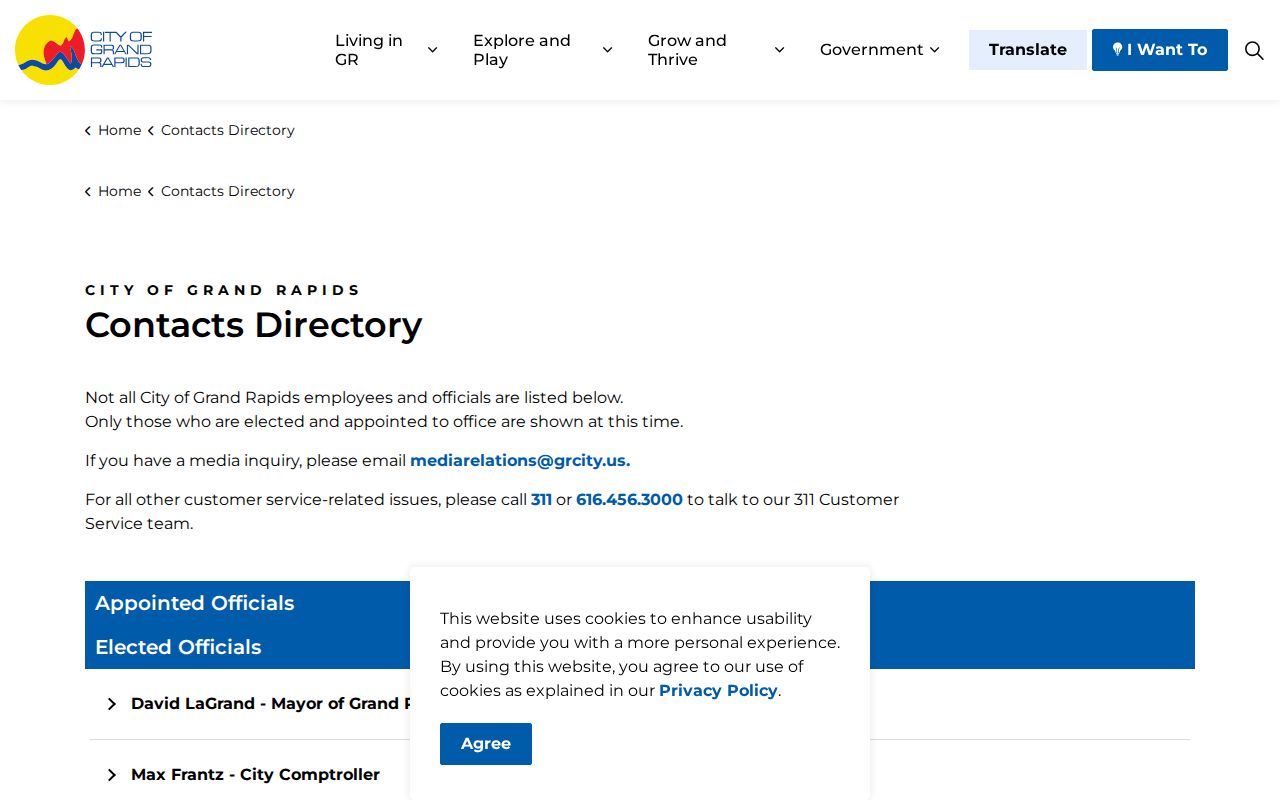
The visual directory is a civic contact resource with a stated incomplete scope, so it should never be read as a universal resident list.
Grand Rapids Names in Business and License Records
A business filing or professional-license result can provide an affiliation clue when it is read narrowly. Michigan's business route can show an entity, registered office, agent or filed officer role, while a MiPLUS license record can show license status, issue or expiration information, specialty, address, and public discipline where available. Neither source confirms a person's current home or control of a storefront. Compare the record year, role, and address against a parcel, permit, directory, or recorded document before drawing a conclusion.
Michigan's Corporations Division route leads to the MiBusiness Registry Portal for entity records.
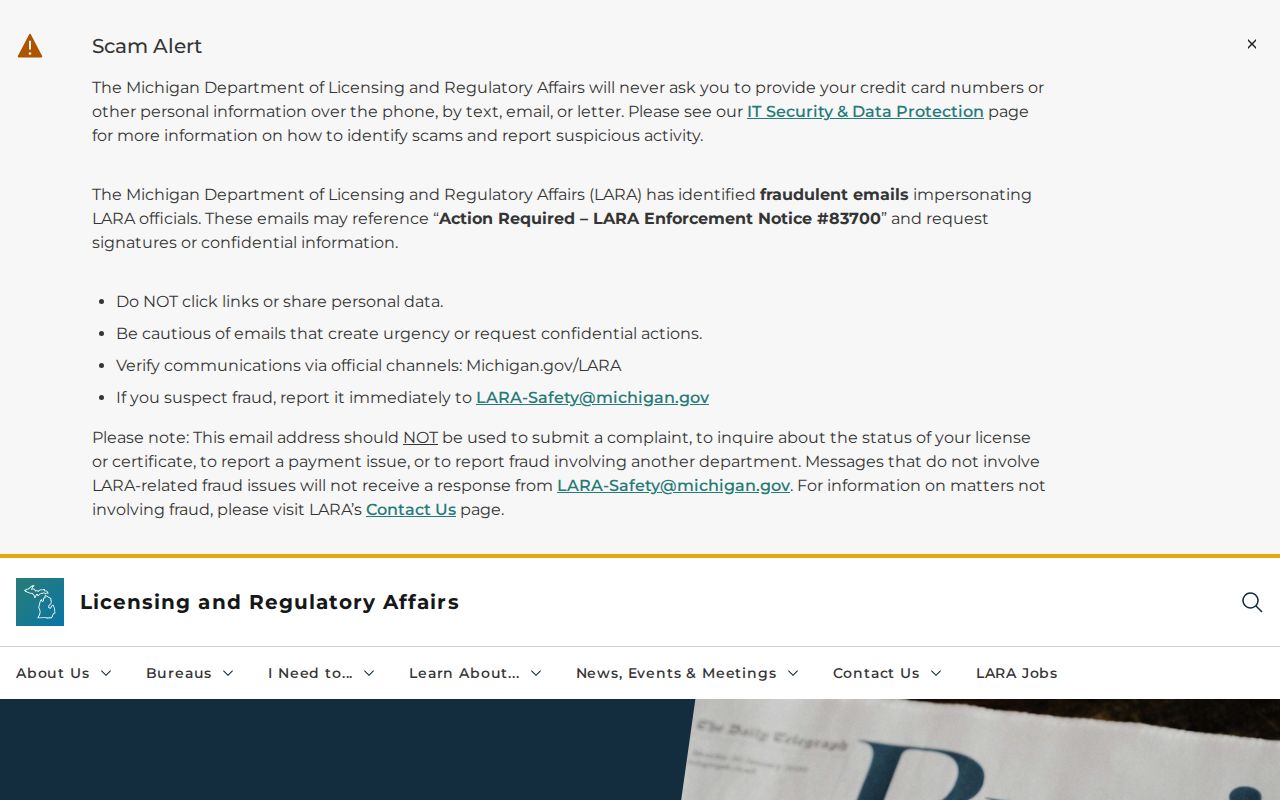
Entity and officer fields can help distinguish a business connection from a personal address claim.
Michigan UCC search is a separate debtor-name index with active and lapsed choices; it is a financing-notice search, not a title conclusion.
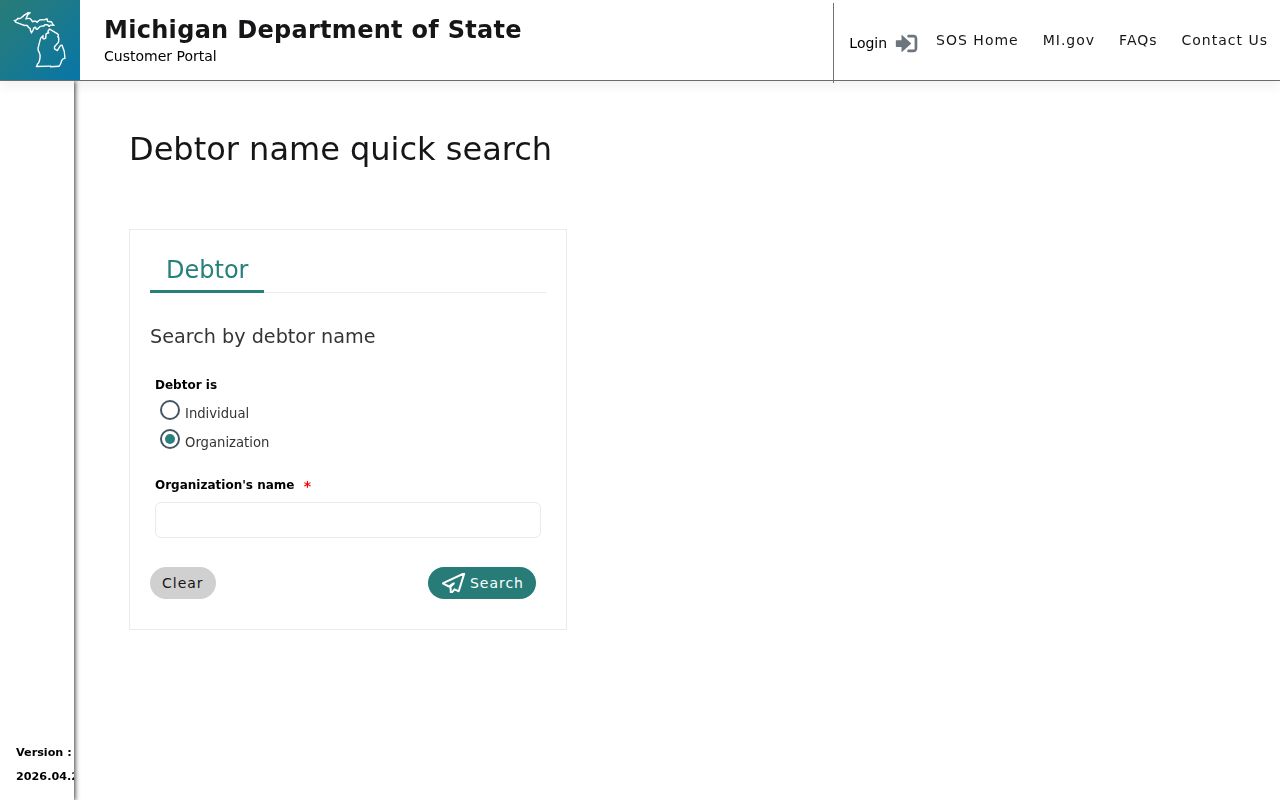
The UCC route can document a filed financing record, but it does not replace the county deed or parcel record.
Grand Rapids Addresses Changed in 1912
Older Grand Rapids resident records have a local trap: the city changed its address system in 1912, using Fulton Street and Division Avenue as the baseline for four quadrants. The 1912 Sanborn material and annotated street index help bridge old and new numbers. Street names changed as well. Search an older household with the old number, new number, street name, nearby cross street, and the lot or block if it is known. A modern geocoder cannot reliably make that conversion for every address.
The 1912 bridge is especially important when a directory entry ends abruptly. The family may have moved, but the apparent gap can also come from the citywide renumbering, a renamed street, a publication gap, or initials instead of a full given name. The Grand Rapids by-street directory explains the modern parcel and street search side of that trail.
Grand Rapids Newspaper and Obituary Leads
Newspapers and obituary indexes can provide the bridge between a directory year and an estate, cemetery, or probate record. Grand Rapids Press and Herald obituary indexing begins in 1910 through the Western Michigan Genealogical Society, while the library's historic newspaper resources include important local runs and a newer search viewer launched in 2025. These are leads that need date and name checks. An obituary may point to relatives, a former address, a funeral home, or a burial place, but the underlying custodian is still the best source for a final record.
The Library of Michigan Kent County guide is the source shown below and extends a local search to older county record groups.
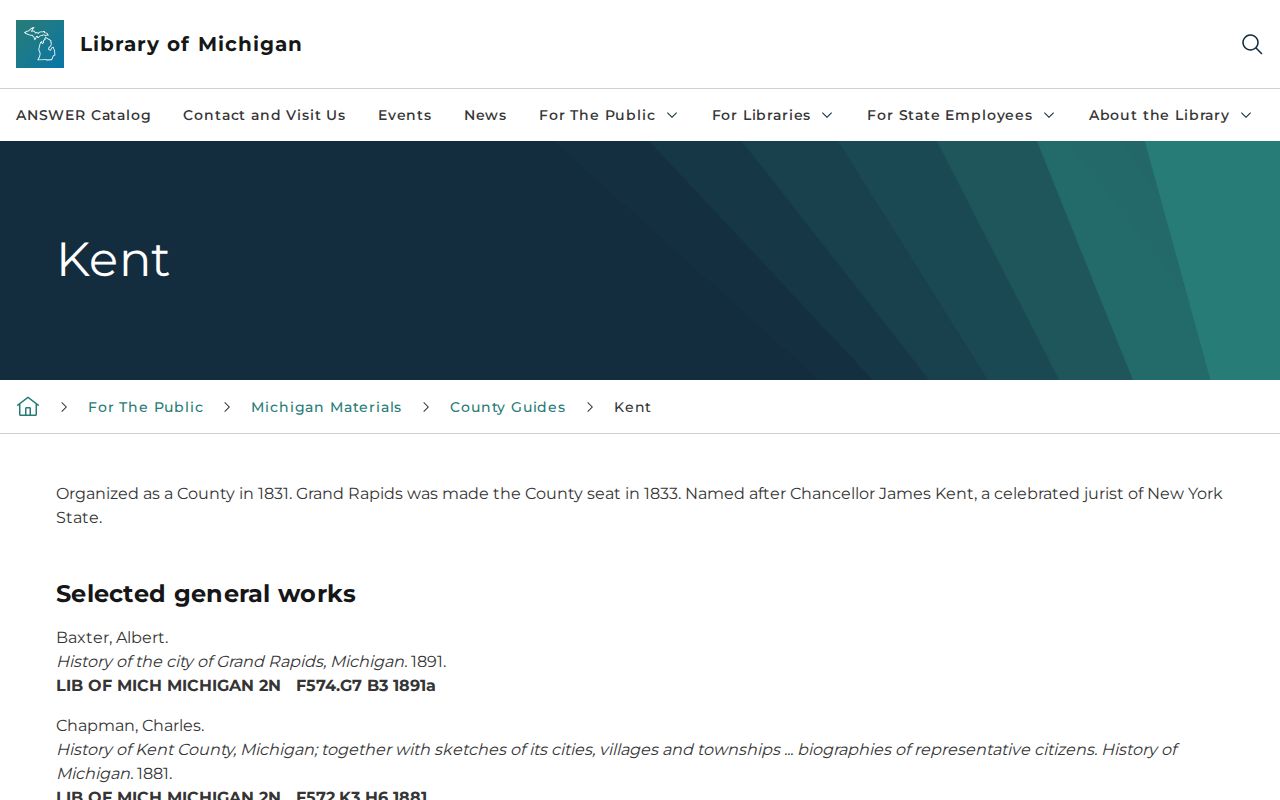
The Kent County archives guide is a useful extension when local library and city collections point to older county, naturalization, military, or court material.
Historical Grand Rapids Resident Directories
The historical shelf is unusually deep in Grand Rapids. The Grand Rapids History Center documents city-directory microfilm from 1856 through 1956, a broader cataloged run from 1859 through 1998, and later Kent County East and West volumes. The earliest documented item in Collection 301 is the 1859/60 Williams Grand Rapids Directory. City Archives also lists Polk directories from 1865. A directory can put a name, occupation, business, or household clue at a printed address for that edition. It cannot, by itself, prove ownership or fill a year that was not published.
- Parcel
- A mapped unit of land with an identifying number, distinct from a list of everyone at an address.
- Index
- A finding aid that points to a record, rather than the full record or a certified copy.
- Criss-cross directory
- An address-oriented directory section that can help connect a street address to a printed occupant or business entry.
Catalog gaps matter: the library notes no publication for 1947, 1950, 1952, 1957, 1989, and 1991 in the relevant series. Selected editions are digitized in HathiTrust and Google Books, while many volumes remain an in-library or archive request. The full collection methods, abbreviations, and tracing steps are on the Grand Rapids city directories page.
Grand Rapids Residents Need Protected-Address Limits
Some records are deliberately not a public search result. Michigan's Address Confidentiality Program gives eligible participants a substitute address and protected voter-registration treatment. Vital records, sealed and juvenile court matters, protected voter information, driver records, utility accounts, and many private membership lists have separate limits. A missing result can reflect a restriction, an index gap, a different spelling, or a record that is held only at the counter. It is not proof that a person was never connected to Grand Rapids.
Michigan's Address Confidentiality Program describes the substitute-address protections and who may qualify.
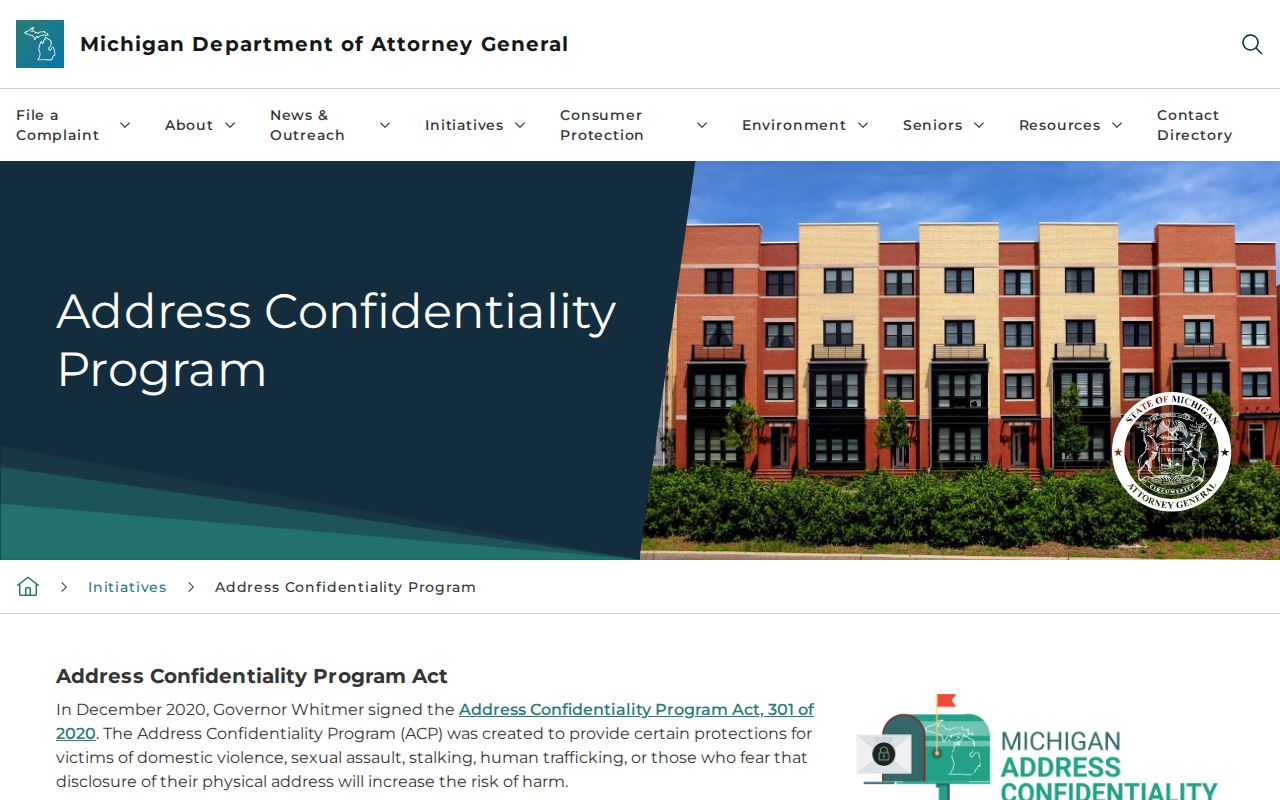
Protected-address rules are one reason an official result should be read for its limited purpose and confirmed with the custodian when appropriate.